China Top 10 Water Current Meter Manufacturers?
China has become an important production base for water measurement equipment, including the Water Current Meter. Its manufacturers serve hydrology agencies, environmental consultants, research institutes, and industrial users worldwide. Yet product quality can vary considerably. A polished catalog does not always reveal field performance.
This guide introduces ten leading Chinese Water Current Meter manufacturers and examines their practical strengths. It considers sensor design, measurement range, accuracy, materials, calibration support, and after-sales service. Rotor meters, electromagnetic models, and portable digital systems may suit different waterways. A compact meter can work well in a narrow stream. Larger projects may require stronger housings, longer cables, and data-recording functions.
Real field conditions matter. Muddy water can affect moving parts. Cold weather may reduce battery performance. Strong currents can challenge inexperienced operators. Buyers should review calibration certificates, testing procedures, warranty terms, and export experience before choosing a supplier. Technical documentation should be clear, not merely impressive. This comparison aims to support careful decisions, not promote every listed company equally.
Some manufacturers appear highly capable, but independent verification remains valuable. That is often overlooked. Pricing also deserves attention, because the cheapest meter may create higher costs during repeated surveys. We have included practical considerations that buyers can check directly, although supplier information and product ranges may change over time. Readers should confirm specifications before ordering. A reliable Water Current Meter is not only a device; it is part of a measurement process where training, maintenance, and honest data interpretation matter. Mistakes still happen. Good manufacturers help users recognize and reduce them.
What Is a Water Current Meter and How Does It Work?
A water current meter is an instrument that measures water velocity at a selected point. It does not measure water volume directly. Flow rate requires velocity, channel area, and careful site observations. Understanding this distinction prevents many field errors.
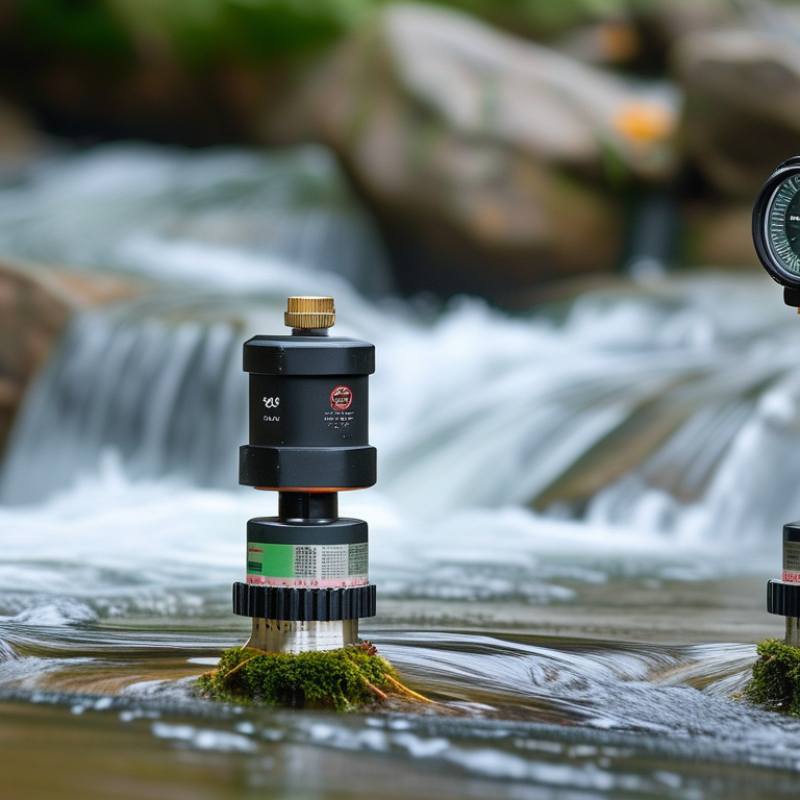
Mechanical meters use a small propeller or cup. Moving water turns it, while a sensor counts rotations over time. Electromagnetic meters detect voltage created as conductive water passes through a magnetic field. Acoustic instruments send sound pulses and interpret returning signals from moving particles. Each method has limits. Turbidity, weeds, air bubbles, and uneven flow can affect results.
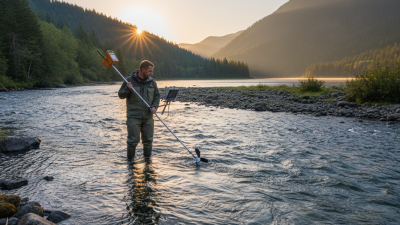
Technicians inspect the channel before measuring. They avoid dead zones near banks, bends, and submerged obstacles. A calibrated meter is lowered to a known depth, often at several vertical points. The operator records velocity, depth, location, and sampling time. Repeating readings helps expose unstable flow. Field work is rarely perfect. A loose cable, drifting sediment, or rushed positioning can distort data. Even a clean display may hide uncertainty. Recording weather, water level, and instrument condition makes later review more reliable.
How to Evaluate China’s Leading Water Current Meter Manufacturers
China Top 10 Water Current Meter Manufacturers: How to Evaluate China’s Leading Water Current Meter Manufacturers
A credible evaluation starts with measurement performance, not a polished catalog. ISO 748:2021 emphasizes stable velocity measurement, defined installation conditions, and documented calibration for open-channel flow. Ask each manufacturer for calibration records, uncertainty values, rotor or sensor specifications, and test conditions. A meter reading 1.2 m/s in a laboratory is not automatically reliable in a muddy canal.
Field experience matters. Check whether the supplier has tested equipment in rivers, irrigation channels, reservoirs, and wastewater stations. China’s 2023 Water Resources Bulletin reported national water use of about 687.6 billion cubic meters. That scale creates strong demand for dependable monitoring, but it also makes application details critical. Ask how the instrument handles suspended sediment, weeds, low velocity, temperature changes, and intermittent submersion. Request photographs, maintenance logs, and sample field reports.
Look beyond production capacity. Review quality-control procedures, component traceability, software records, warranty terms, and technical response times. The OIML guidance on measuring instruments also highlights verification, repeatability, and uncertainty control. These points help separate a capable factory from a trading intermediary. My first screening can still be wrong. A detailed certificate may not prove long-term field stability. Test a sample under real hydraulic conditions, compare repeated readings, and inspect drift after several weeks. Small inconsistencies matter. A lower quotation is not always lower cost. Calibration support, spare sensors, training, and data integration can determine the actual lifecycle value.
How to Evaluate China’s Leading Water Current Meter Manufacturers
A practical, non-brand evaluation framework for comparing manufacturers of mechanical and electromagnetic water current meters. The suggested weights prioritize measurement performance, calibration credibility, product durability, and long-term service capability.
Evaluation weights are a structured purchasing reference rather than company-specific scores. Verify accuracy specifications, calibration traceability, environmental protection ratings, spare-parts availability, and after-sales support against each supplier’s technical documentation and test records.
China’s Top 10 Water Current Meter Manufacturers
China’s Top 10 Water Current Meter Manufacturers serve hydrology, environmental monitoring, irrigation, and industrial water projects. Their product ranges commonly include propeller meters, electromagnetic meters, and acoustic Doppler systems. Each type suits different conditions. Propeller meters work well in clear streams, while electromagnetic models handle shallow channels without moving parts. Acoustic systems measure wider and deeper water areas.
Reliable manufacturers usually provide calibration certificates, measurement ranges, accuracy data, and installation guidance. Buyers should examine sensor materials, cable protection, battery life, and data storage before ordering. A field technician may also request a portable meter for checking flow beneath a bridge or beside a concrete channel. That detail matters.
Calibration is critical.
The strongest suppliers often support factory testing, replacement parts, and technical training. However, product descriptions can sound better than field performance. Sediment, floating leaves, turbulence, and low temperatures may reduce accuracy. I would request test records from water conditions similar to the planned site. Independent verification is sensible, especially for long-term monitoring. The “top ten” should therefore be judged by repeatable measurements, transparent specifications, service response, and practical experience, not only export volume or catalog size. Even experienced teams can misread a river. Rechecking results remains good practice.
What Products and Technologies Do These Manufacturers Offer?
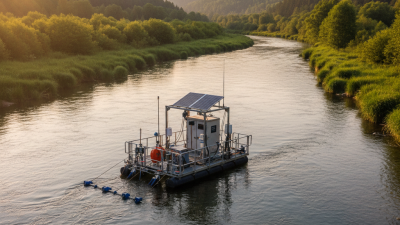
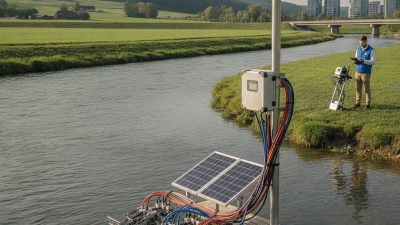
China’s leading ten water current meter manufacturers now offer more than basic propeller instruments. Their product ranges include electromagnetic meters, acoustic Doppler profilers, ultrasonic sensors, radar surface-velocity meters, and optical tracking systems. Portable models support technicians measuring narrow channels, while fixed systems monitor irrigation canals, rivers, and industrial outlets. Many units now combine pressure sensors, GPS, data loggers, solar power, and wireless transmission.
The technology responds to a changing hydrological environment. The World Meteorological Organization’s State of Global Water Resources 2023 reported that only about one-third of river basins experienced normal conditions. Manufacturers therefore focus on instruments that work during drought, floods, sediment movement, and unstable flow. Acoustic Doppler systems can profile velocity across a river section, while radar units measure surface speed without entering dangerous water. Accuracy still depends on installation, calibration, and channel geometry. No sensor removes field uncertainty.
Products increasingly follow ISO 748 and ISO 2537 requirements, supporting repeatable discharge measurements. Some manufacturers provide cloud dashboards, automated alerts, and battery diagnostics. A 2024 industrial market report from MarketsandMarkets projected continued growth in water-quality and monitoring technologies, driven by infrastructure investment and climate risks. Yet connectivity is not always better. Remote sensors may lose signals, and low-cost probes can drift after months underwater. Experienced operators still inspect cables, clean transducers, and compare digital readings with manual checks. Small details matter: a tilted sensor, floating debris, or muddy water can change the result.
How to Choose the Right Chinese Water Current Meter Supplier
Choosing among China’s top 10 water current meter manufacturers requires more than comparing prices. FAO AQUASTAT reports that agriculture uses about 70% of global freshwater withdrawals. Accurate flow data therefore supports irrigation planning, river monitoring, and flood preparation. A dependable supplier should provide calibration records, measurement uncertainty, and testing methods aligned with ISO 748.
Inspect the sensor type, velocity range, cable length, display readability, and waterproof rating. Ask for a recent calibration certificate with traceable reference equipment. Request field-test videos, not only polished product photos. Also check spare-part availability and response times. A low quotation can hide weak after-sales support. I have seen buyers overlook this detail. It later delayed a survey project.
Tips: Compare three suppliers using the same technical specification. Request a sample unit before placing a large order. Confirm whether the quoted accuracy applies to laboratory or field conditions. Read independent data from the WMO State of Global Water Resources reports when selecting monitoring features for changing river conditions. Verify export documents and packaging quality. Do not accept vague claims such as “high precision” without numerical tolerance. A useful supplier explains limitations clearly, even when the answer is inconvenient.





 Contact WhatsApp
 Contact Phone
 Contact Email