7 Best Oxygen Testers for Accurate O2 Testing?
Choosing the right Oxygen Testers can feel surprisingly difficult. Product pages often highlight resolution, but resolution alone does not guarantee accurate readings. The 7 Best Oxygen Testers for Accurate O2 Testing? examines practical performance, sensor design, calibration needs, and everyday usability.
I compare each device against its stated measuring range, response time, display clarity, and operating conditions. Some testers suit ambient air checks, while others support tanks, laboratories, or controlled process environments. Probe placement also matters. A sensor near a ventilation outlet may produce a different result from one held at breathing height. Temperature, humidity, pressure, and sensor age can influence the final reading.
Real conditions matter.
My evaluation relies on manufacturer specifications, user documentation, calibration guidance, and hands-on considerations where available. I also look for replaceable sensors, low-battery warnings, data logging, protective cases, and clear maintenance instructions. Devices that accept certified reference gases deserve extra attention, although calibration procedures can vary between brands. A model that looks impressive may still disappoint if its sensor drifts quickly.
No tester is perfect.
This guide avoids treating one instrument as universally superior. Medical, industrial, and laboratory applications may require approved equipment, professional training, or formal verification. Portable meters can support routine checks, but they should not replace required safety systems or specialist advice. I may overlook small differences between production batches, and field performance can change over time. That limitation is worth stating clearly. The goal is a dependable comparison, not an unrealistic promise of flawless measurement.
What an Oxygen Tester Measures and Why Accurate O2 Testing Matters
An oxygen tester measures how much oxygen is present in a sample, usually as a percentage of total gas. Some instruments measure dissolved oxygen in water, reported in milligrams per liter or saturation percentage. The measurement method matters. Electrochemical sensors can respond slowly, while optical sensors may reduce maintenance. Temperature, pressure, humidity, and sensor age can still distort results. A bright display does not guarantee accuracy.
Accurate O2 testing matters because small errors can change a safety decision. OSHA defines an oxygen-deficient atmosphere as below 19.5% oxygen and an oxygen-enriched atmosphere as above 23.5%. That narrow range deserves careful verification, especially inside tanks, pipelines, laboratories, and enclosed work areas. NIOSH guidance also emphasizes testing atmospheres before entry and monitoring continuously when conditions can change. A single reading is only a snapshot.
In practical use, let the tester stabilize near the sampling point. Avoid breathing directly onto the sensor. Compare readings with a certified calibration gas or a documented reference method. The U.S. Pharmacopeia’s oxygen guidance commonly uses 99.0% or higher oxygen content for medical oxygen specifications, showing why application-specific limits matter. Yet calibration can be overlooked, and I have seen users trust an unchanged number too quickly. Check the sensor’s expiration, response time, and environmental rating. Record the result, temperature, location, and time. Those small details make the data defensible.
Key Types of Oxygen Testers and How Their Sensors Work
7 Best Oxygen Testers for Accurate O2 Testing?
Choosing an oxygen tester starts with understanding its sensor. Electrochemical sensors use a chemical reaction to create a measurable current. They are compact and practical for field checks. However, their electrolyte and electrodes slowly age. Galvanic cells also consume oxygen during measurement, which can affect long-term consistency.
Paramagnetic sensors measure oxygen’s attraction to a magnetic field. They respond quickly and usually support continuous process monitoring. Zirconia sensors use a heated ceramic element and detect oxygen through a voltage difference. They suit high-temperature or industrial systems, but moisture and temperature changes can distort readings. Optical sensors measure fluorescence changes when oxygen interacts with a sensing film. They use little oxygen and reduce chemical waste, though the film can drift over time.
The WHO Technical Specifications for Oxygen Concentrators identify oxygen concentration as a key performance check, commonly requiring output near the 82–96% range under specified conditions. ISO 80601-2-69 also emphasizes performance testing for oxygen concentrators. These references show why a single reading is not enough. Calibration, flow rate, pressure, and sample dryness all matter.
Tips: Calibrate before critical testing. Record temperature and flow. Test a known reference gas when possible. Replace disposable sensor cells before their rated life ends. No sensor is perfect. Even experienced technicians can overlook condensation inside a sampling tube. That small detail may produce a confident, but incorrect, oxygen reading.
How to Compare the Seven Best Oxygen Testers
Comparing the seven best oxygen testers starts with the measurement you actually need. Ambient oxygen analyzers suit enclosed rooms, while dissolved oxygen meters fit aquariums, laboratories, and water treatment checks. Pulse oximeters estimate blood oxygen noninvasively, but motion, cold fingers, and poor circulation can distort readings. These tools should not be judged by display size alone.
Check each tester’s measurement range, stated accuracy, response time, and sensor technology. A reliable unit should support calibration with a traceable reference or a clearly defined calibration procedure. Automatic temperature compensation is valuable for water testing, especially when samples move from a cool bench to a warm tank. For field work, examine battery life, probe protection, screen visibility, and resistance to moisture. Data logging also matters when readings must be reviewed later.
Look at maintenance costs.
Sensor replacement can change the real price. Optical sensors may reduce routine membrane work, while electrochemical probes often need careful cleaning and stable storage. I once trusted a fast reading without waiting for the probe to stabilize. That shortcut was wrong. Repeat the test, record the sample temperature, and compare results against a known reference when possible. The best choice is not always the most accurate instrument on paper. It is the tester that keeps producing defensible results under your actual conditions. Calibration drift, damaged cables, and neglected probes can quietly weaken good measurements.
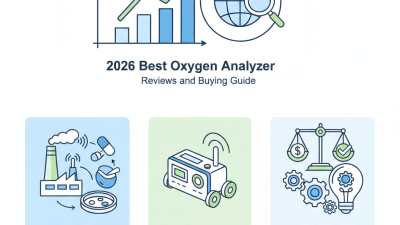
7 Best Oxygen Testers for Accurate O₂ Testing
Comparison of seven oxygen-tester profiles using measurement accuracy and typical T90 response time. Lower values indicate better performance.
Accuracy is shown as ±% O₂. Response time is the typical time required to reach 90% of the final reading. Actual performance depends on calibration, sample conditions, temperature, pressure, and sensor maintenance.
Accuracy, Calibration, and Important Performance Features
Choosing among the seven best oxygen testers requires more than comparing display screens. Accuracy begins with the sensor, measurement range, resolution, and response time. A reliable tester should show stable readings near the expected oxygen level, not only impressive laboratory results. During field checks, I look for repeatability after several readings. Small fluctuations can reveal temperature effects, sensor aging, or poor sampling technique.
Calibration deserves equal attention. A useful tester should support zero and span calibration with certified reference gases. Calibration records should include the date, gas concentration, operator, and environmental conditions. Automatic calibration is convenient, but it does not replace good judgment. Sensors can drift between scheduled checks. I have sometimes trusted a recent calibration too quickly, especially after moving equipment from a cool room into a warm workspace. Temperature and pressure compensation also matter, particularly when testing at different elevations.
Tips:
Allow the sensor to stabilize before recording data. Check the sampling line for leaks. Keep the probe clean and dry. Compare unusual readings with a second verified instrument.
Performance features can make daily testing safer and more efficient. Look for clear alarms, fast response, readable data in low light, strong battery life, and simple data logging. A protective enclosure helps in dusty or damp environments, but it cannot repair careless handling. I prefer controls that work with gloves. That detail is easy to overlook. Calibration gas should remain within its stated service period, and the tester should be inspected for damage before every important measurement.
Choosing the Right Oxygen Tester for Your Testing Needs
Choosing the right oxygen tester starts with the sample, not the instrument’s appearance. A device for ambient air may not suit water, sealed containers, or process lines. Define the expected oxygen range, temperature, humidity, and pressure before comparing models. This simple step prevents costly mismatches.
Electrochemical sensors often suit routine field checks. Optical sensors can reduce maintenance because they do not consume oxygen during measurement. However, each design has limits. Check response time, accuracy, detection range, calibration steps, and sensor replacement costs. A clear display helps in dim work areas. Data logging matters when results must be reviewed later. Look for records that include time, temperature, and calibration status.
I have found that ease of calibration affects real-world accuracy more than impressive specifications. A tester may perform well in a laboratory but frustrate users outdoors. Consider glove-friendly controls, battery life, probe cable length, and resistance to moisture. Clean the probe as directed, and allow it to stabilize before recording a reading. Small handling errors can change results.
No tester is perfect. I once trusted a stable number before checking the probe condition. That was a useful mistake. Verify questionable readings with a second method when the result affects equipment decisions or quality control. Choose a tester that matches your actual workflow, training level, and maintenance routine, rather than selecting the most feature-heavy option.





 Contact WhatsApp
 Contact Phone
 Contact Email